Revisiting Episode 8: The Importance of Neuromuscular Training
Originally titled “Stop Your Legs from Fighting (Themselves),” we look back at episode 8 to see how our views—and the science—has changed regarding neuromuscular work.

Connor is an exercise physiologist, endurance sports coach, and raced in the professional cycling peloton for over 20 years.
Over the past two decades, Coach Connor has been fortunate to experience all sides of the cycling, endurance, and nutrition/health world. From his own experience racing the professional circuit, managing teams, coaching athletes of all levels, and writing for cycling and nutrition magazines, he brings a variety of knowledge and experience to Fast Talk Labs.
Connor raced in the pro peloton for nearly 20 years, getting on the podium at some of the largest races in North America. He started his coaching career working with the National Development program at Pacific Sport in Canada. From there he coached the Colorado State University Cycling team to number two in the country and worked with several semi-pro and amateur teams throughout Canada and the U.S.
From 2011 to 2020, he wrote the monthly training articles for VeloNews magazine. This is also where he first became the co-host of the popular training podcast Fast Talk.
From 2012-2014, Connor managed one of the top-ranked amateur teams in America, Team Rio Grande. He is an alumni of the 14-year program which includes several top finishers at Gran Tour events.
Connor’s master’s thesis advisor was Dr. Loren Cordain, the originator of the popular Paleo Diet. Connor has been the CEO of The Paleo Diet since 2018.
He founded Fast Talk Laboratories, LLC in 2019 where he continues the podcast and focuses on producing information on endurance sports training from top coaches, physiologists and professional athletes from around the world.
Originally titled “Stop Your Legs from Fighting (Themselves),” we look back at episode 8 to see how our views—and the science—has changed regarding neuromuscular work.
Blood tests can help tell whether an athlete is overtrained or performing at their best, but is it a good idea for athletes to do regular testing? We discuss with Dr. Lauren Rudolph.
We talk with TrainingPeaks founder Dirk Friel about how athletes, coaches, and training software now focus on the whole athlete instead of only training plans.
We talk with National Cyclocross Champion Eric Brunner about how to best give and receive feedback—not only in sports, but all aspects of life.
In this potluck we discuss what to do when you’re struggling to hang on to a wheel, what the overall goal of training should be, and how to handle needing to poop during a long running event.
It’s a given that after a race or workout you do a cooldown—but is there any evidence this actually helps? The science may say otherwise.
We’ve talked a lot about sports psychology tactics, but in this episode Dr. Brian Zuleger explains how to effectively apply them to your performance.
We explain what metabolism is, how our bodies use carbs and fat for fuel, and give an overview of the complex process designed to produce one molecule: ATP.
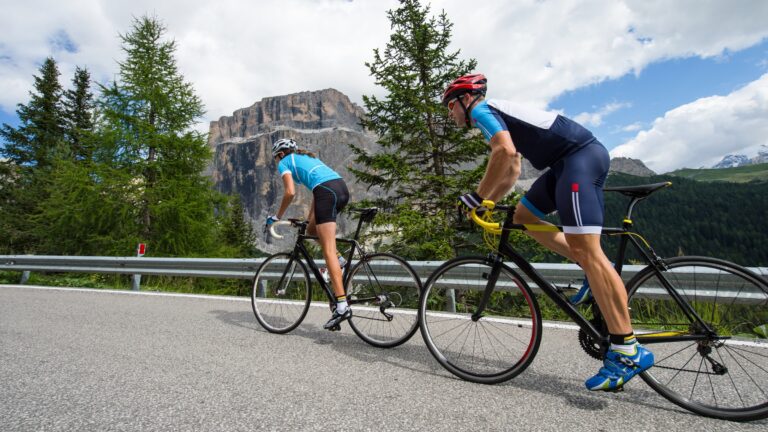
There are many ways to do sprint workouts, but this is one of my favorites.
Our team dives into these important topics and along the way, Grant shows his “dadness,” while Rob and Trevor argue while making the same point.
While pros do a lot of both high- and low-cadence work, we talk with one of the top experts in the world on cadence, Dr. Ernst Hansen, about why the science isn’t so clear.
Whether you’re a participant, event organizer, or volunteer, keep in mind Murphy’s Law – anything that can go wrong could (or will) go wrong. When one or more athletes are injured, you need to know what to do. We talk with Dr. Andy Pruitt about how to ensure the best outcomes.
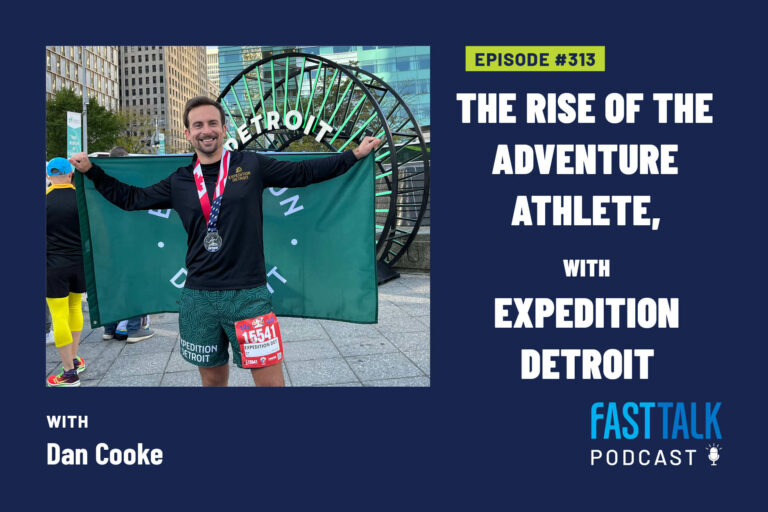
We discuss what adventure athletes need as well as how to support emerging outdoor sports hubs with Expedition Detroit founder, Dan Cooke.
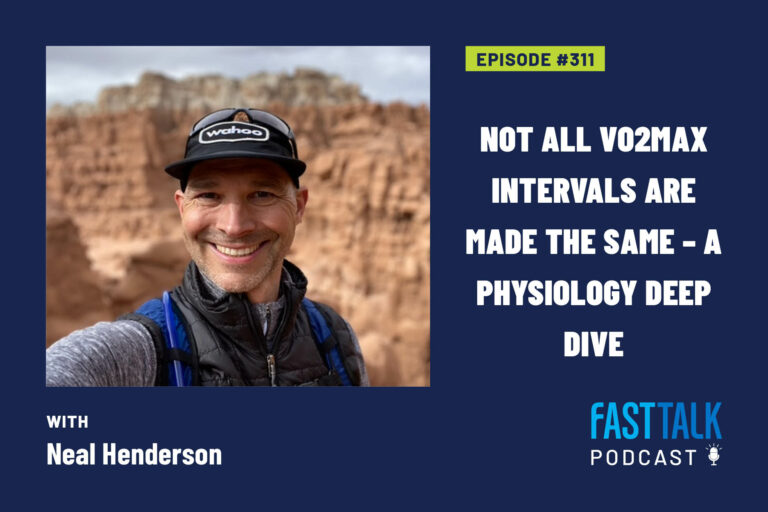
“VO2max intervals” is a term used to describe an enormous range of work. We talk with coach Neal Henderson about why they are not all made the same and how best to build that critical race fitness.
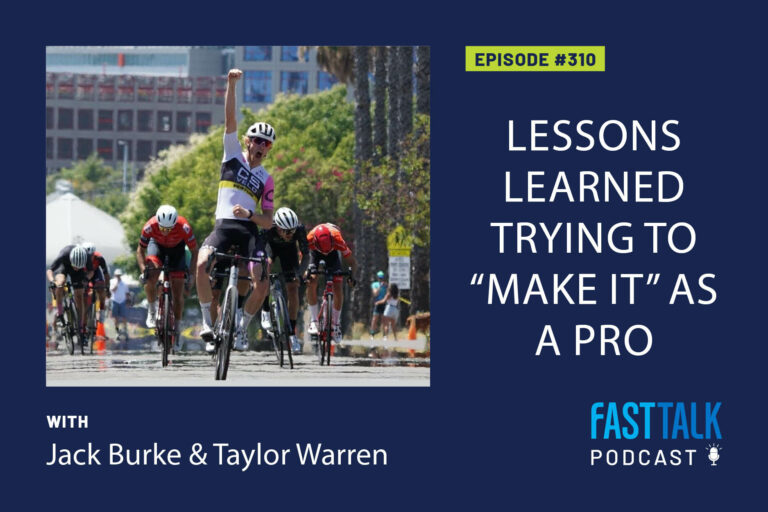
Trying to go pro is one of the hardest things we can do. Jack Burke and Taylor Warren share what they’ve learned so far, and, surprisingly, what they’ve gleaned may apply to the rest of us, too.
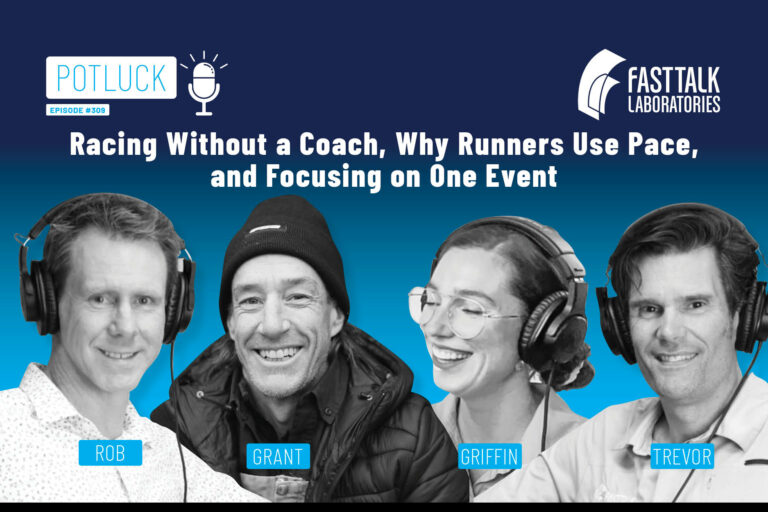
For this week’s potluck, we discuss what athletes lose when they don’t have a coach, Grant gets on his soapbox about running and pace, and then asks about training specifically for one event.
The number of, well, numbers we track during training is exploding, but they’re not all made equal. Some represent actual measurements while others are just estimates. We discuss the implications.
We talk with Examine.com writer Brady Holmer about how diet, exercise, and sleep all impact one another and ultimately play a key role in our health and performance.