Are Training Zones Dead?
Talking about training in terms of different intensities dates all the way back to the ancient Greek. But with the advent of heart rate monitors and power meters, several decades ago, we needed a way to structure the data. Training zones gave that critical structure, providing context at a time when our tools for analysis and monitoring were limited.
That is no longer the case. Modern training software and even the devices we take on our rides, runs and swims, can give a plethora or highly individualized information, both in post-workout analysis and in real time. So, all of this begs the question, have we outgrown training zones or is there still a place for them?
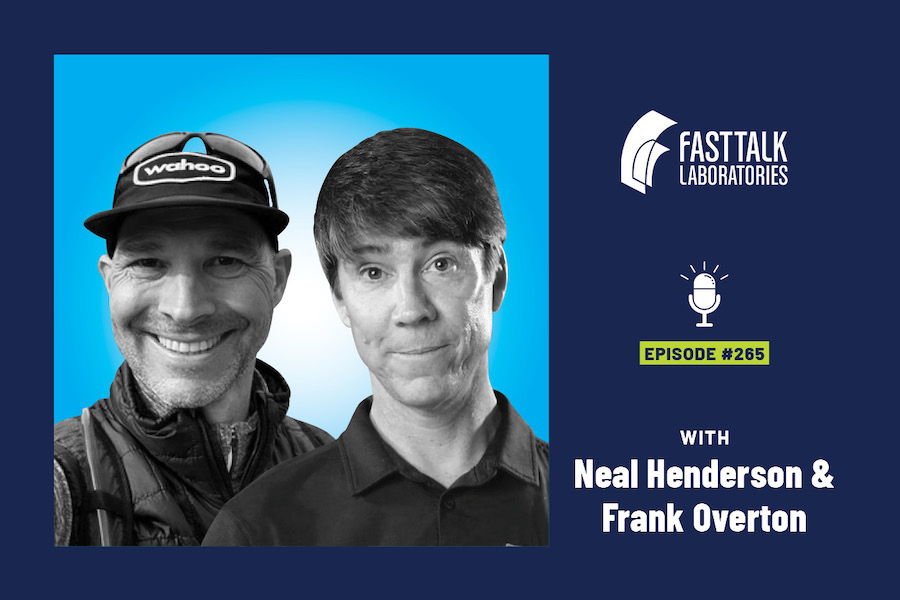
We addressed this question in episode 72 with the originators of the popular Coggans zones, Dr. Andy Coggan and Hunter Allen. But a lot has changed since then. So in this episode we talk with elite coaches Neal Henderson from Wahoo and Frank Overton, owner of Fascat Coaching, about what the original role of training zones was, how they are currently using training zones, and what they think the future holds. Will there come a day when training zones are truly replaced?
We also hear Joe Friel’s thoughts on zones and perceived effort, while Dr. Stacy Sims talks about some of the issues women have with training zones. Dr. Inigo Mujika gives his insights on where he believes zones still have a role and where they don’t.
So, find the optimal zone for your listening experience, and let’s make you fast!
RELATED: How to Use Data to Make Better Training Decisions, with Tim Cusick
Quotes from the Show:
- “I think we have to consider human nature, there is an infinite number of ways that we can describe intensity, an infinite number of discrete wattage is that you could work at, and we love to put things into nice, neat little boxes, tie them up with a cute little box. “
- “There is nothing magic physiologically about the zones. It’s not like you train right in the zone, and you’re gonna get this magical response. Zones are a communication tool, it just made it much easier for coaches and athletes to work together and for the coach to give that athlete guidance. And that’s more of how you really should be looking at them.”
- “I think that the future is that there’s multiple levels associated in a prescription that you can make an adjustment based on how you’re responding on the day. So based on the output and your heart rate response, that you may have that floating target being adjusted for a given workout target or based on the output, you have in your first couple efforts, that it may adjust upcoming efforts in that way that there’s kind of that utilizing your individual previous results and capacity to then adjust on the fly what you’re doing now, from multiple different angles, rather than just one single that multivariate power, heart rate, or muscle oxygen or all these other things and proceed effort, get that cytometer in there.”
- “We have been trying to take external measures, and have them define internal physiological events. And I think, especially for aerobic longer durations, sustainable sort of workloads, when we’re monitoring that. I think that’s something– Neil– you mentioned before continuous lactate monitor, we have to be close to the technology that allows us to understand what’s happening and relative real time to the biomarkers inside of us. And I would love to go out and do a ride where I was keeping my lactate between 1.2 and 1.5, mmol”
- “I’m gonna go a slightly different direction just to be a little bit of the old school church in sort of in sort of No, oh, so I still think to the end of time, one of the most important things for an athlete is to learn the field is to learn the feel of a steady ride to learn the field, the different types of intervals and to really understand when their body is functioning well, when their body isn’t functioning well to understand how different intensities should feel. And I don’t think anything on your wrist or on your handlebars can can replace that if you don’t have the feel.”